
Midland County Arrest Records and Court Charges
An arrest record in Midland County is the account of an arrest itself. It names who was taken into custody, which agency made the arrest, and the booking that followed. The Midland County Sheriff's Office and city police handle that side of the process. Booking creates the first data points. Those include the name, the date, the offense alleged, and the bond. Once the arrest is done, the case moves to a new stage. A prosecutor reviews the facts. That review sets the formal charges. Those charges, filed with the court clerk, become the court charge record.
The agencies that make arrests are the first source of any arrest record. The Midland County Sheriff's Office books people into the county jail and keeps the earliest arrest data.
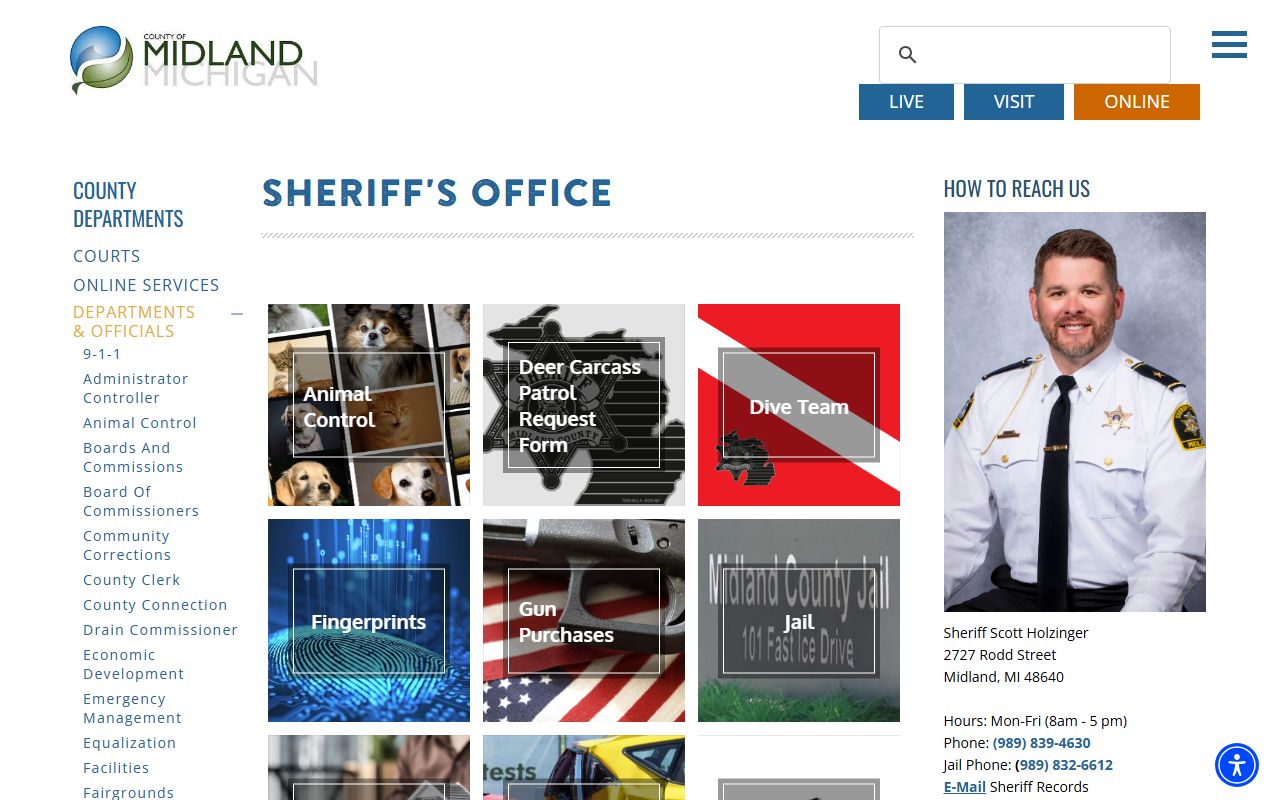
Its records unit is where booking questions begin, while the charges themselves move on to the court. The two records live in different places. Booking and custody detail sit with the jail, so the county inmate records page is the better route for roster and bond lookups. The court charges after arrest sit with the trial court, tracked case by case. A full case file, with pleas and sentencing, belongs to the criminal court records once a case is open. The charge record is the middle piece. It shows what was filed, under which statute, and where each count now stands.
How to Find Midland County Arrest Records
Court charges after arrest show up in the trial court case index. Michigan runs a single public search for that record. The MiCOURT Case Search covers the 42nd Circuit Court, the 75th District Court, and the Probate Court in Midland County. A search returns the case, the parties, the charge list, and each charge status when the record is public. Booking and custody figures are not there. Those live in the Midland County jail roster instead.
- Open the MiCOURT Case Search portal.
- Pick the court, or search by defendant name or case number.
- Open the matching case and read the full charge list.
- Check each charge for its code, level, and current status.
Charges also reach beyond the Midland County case file. The 75th District Court links a local ticket and payment lookup through GovPros for outstanding items. For a person now in state custody, charges and outcomes appear in the statewide offender search. County online tools show docket data, but Michigan court rule keeps most document images offline, so full papers need a court counter request.
Access Channels for Midland County Arrest Records
No single tool shows every piece of an arrest and its charges. Midland County spreads the information across several official channels. Each one answers a different question. Some are online, some by phone, and one is a mobile app.
- MiCOURT Case Search for the filed charges and their status.
- The county jail roster for current custody and bond.
- The Sheriff's Office records unit for booking records.
- The 75th District Court Criminal Department by phone for arraignment questions.
- Statewide systems for records after transfer to state custody.
Not every arrest in Midland County comes from the sheriff. The City of Midland Police makes arrests inside the city and keeps its own arrest reports.
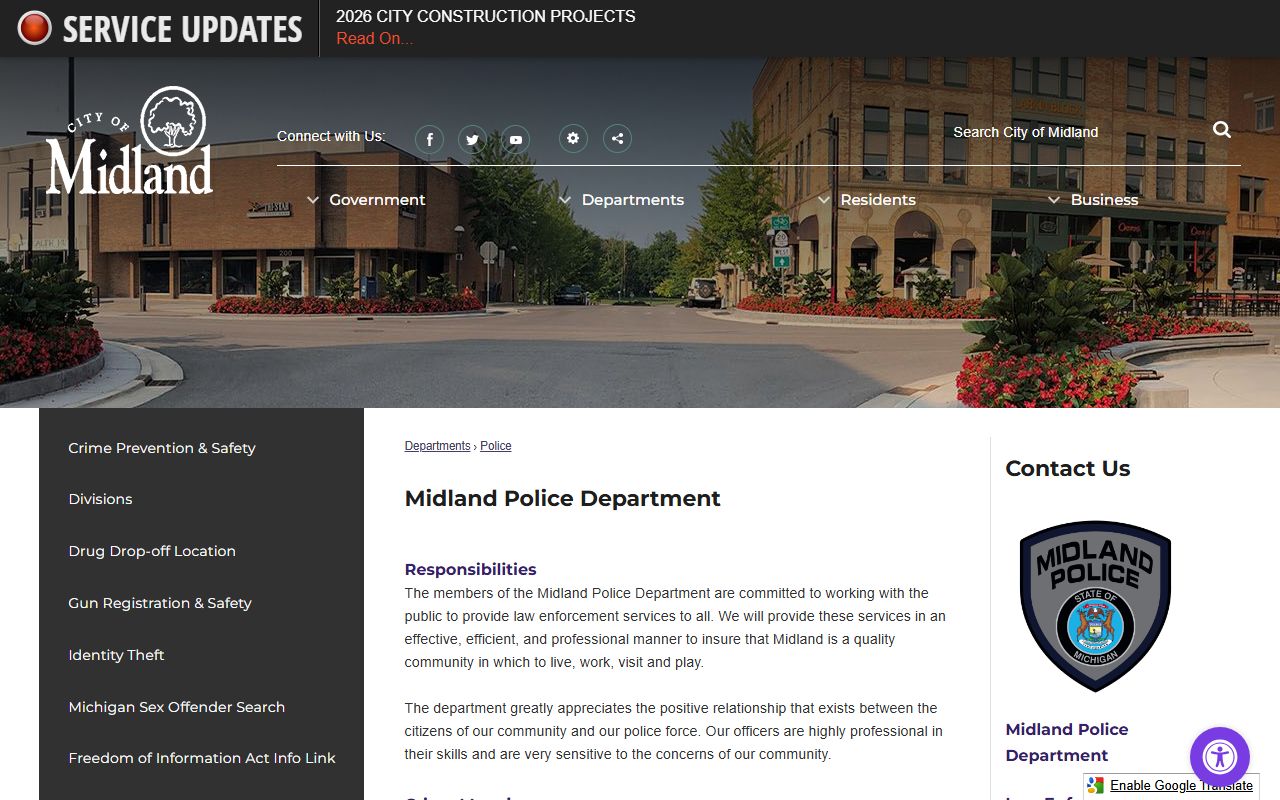
City police reports feed the same court process, so charges from a city arrest still land at the District Court. The city police also run a free phone app. An archived city notice tells residents to search the app store for the Midland Police Department app and lists a contact officer.
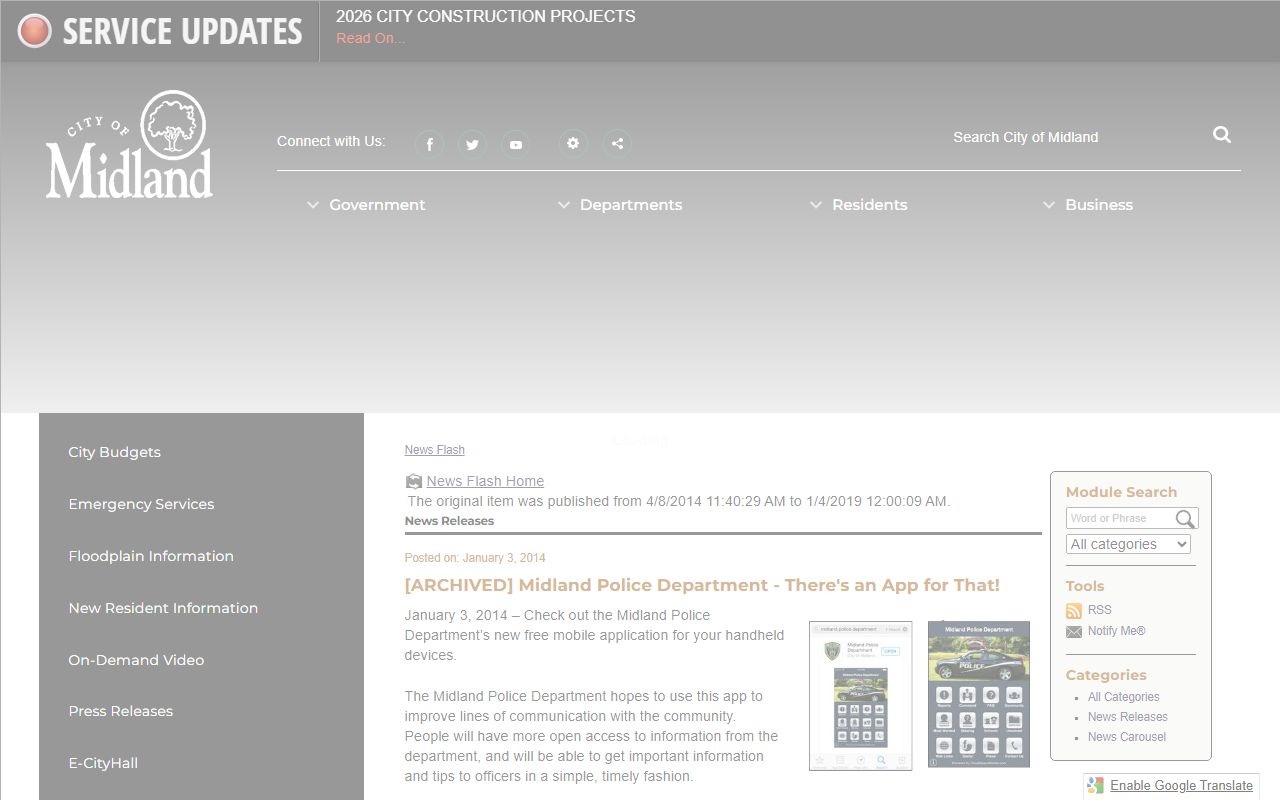
The app carries press releases, wanted-subject notices, and a tip feature. Charge status, though, still comes from the court case search rather than the app.
The Midland County Sheriff App
The Midland County Sheriff (MI) app pulls several tools into one place. It is an official channel built by the Sheriff's Office. The app share page routes users to both major app stores.
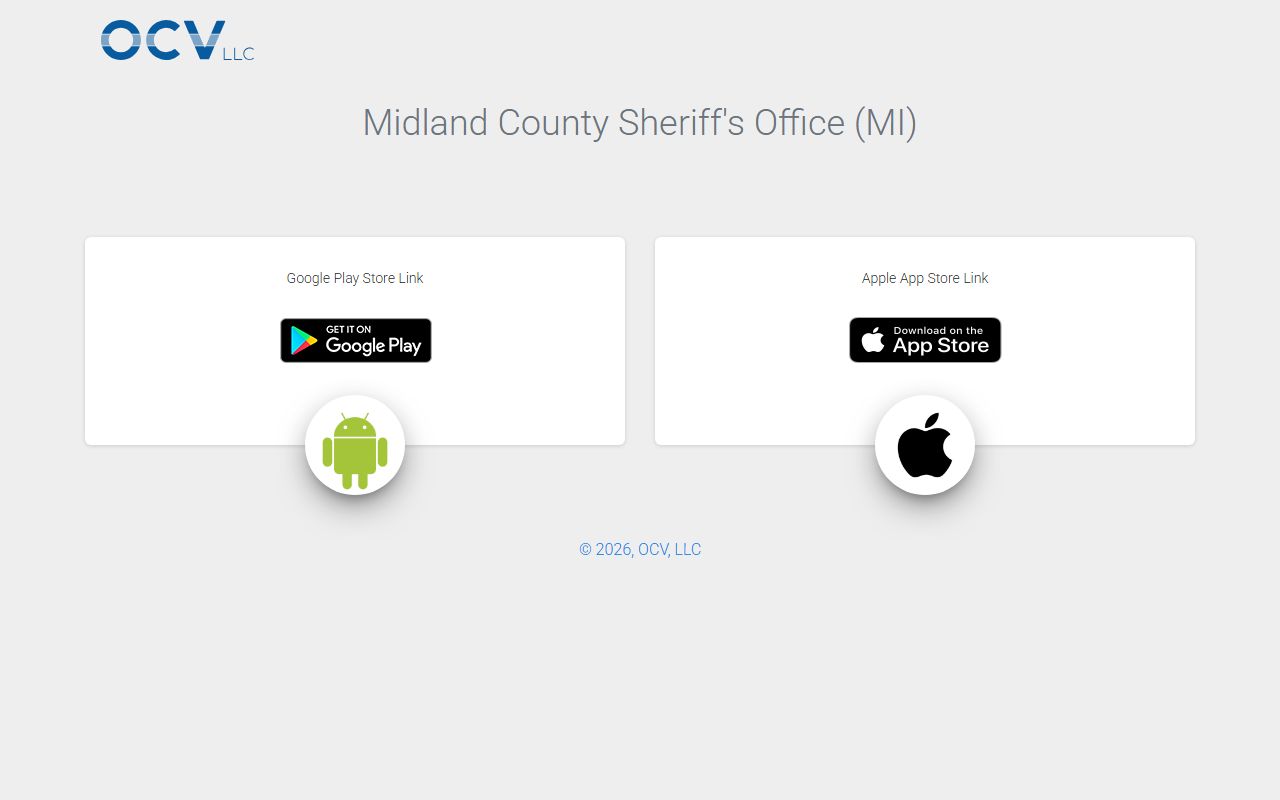
From the app share page, a resident picks the version that matches their phone. Android users install it from the store directly.
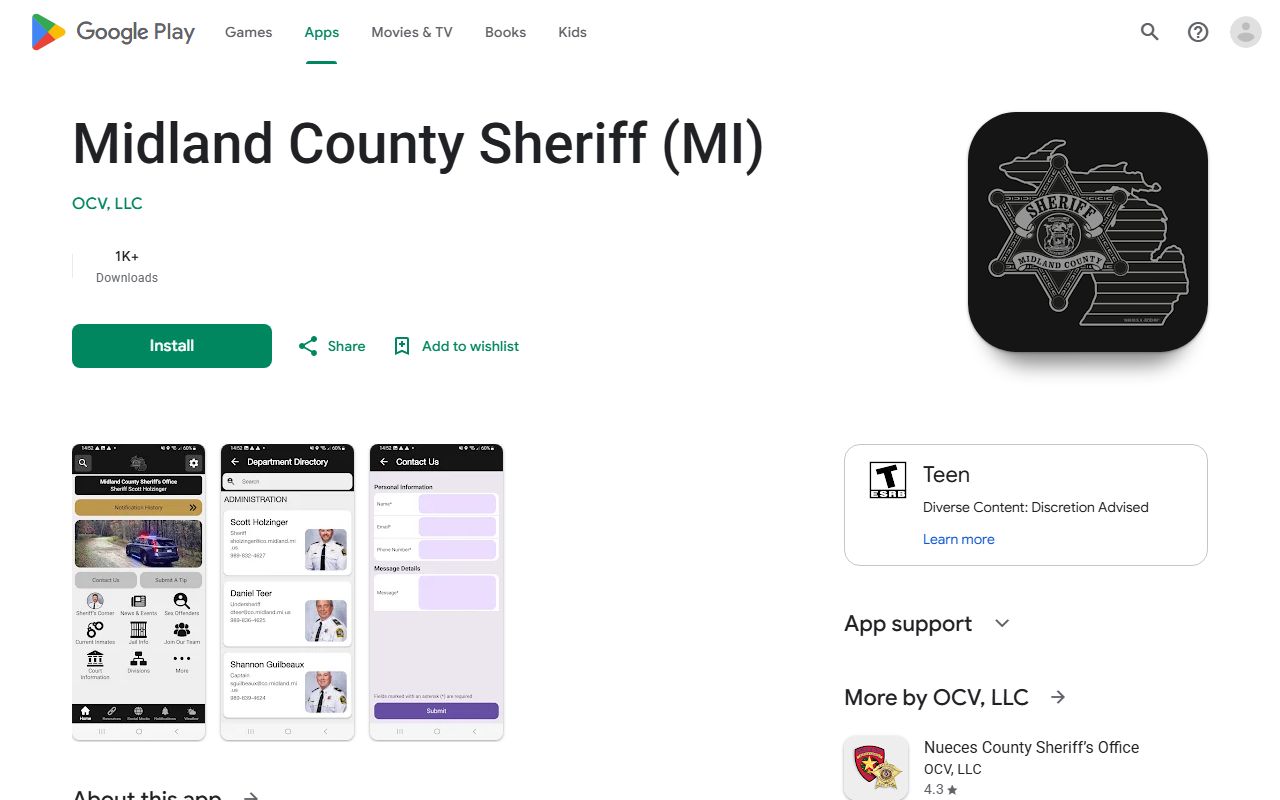
The Google Play listing names OCV as the publisher and shows current inmate information among its features. iPhone users get the same tool from Apple.
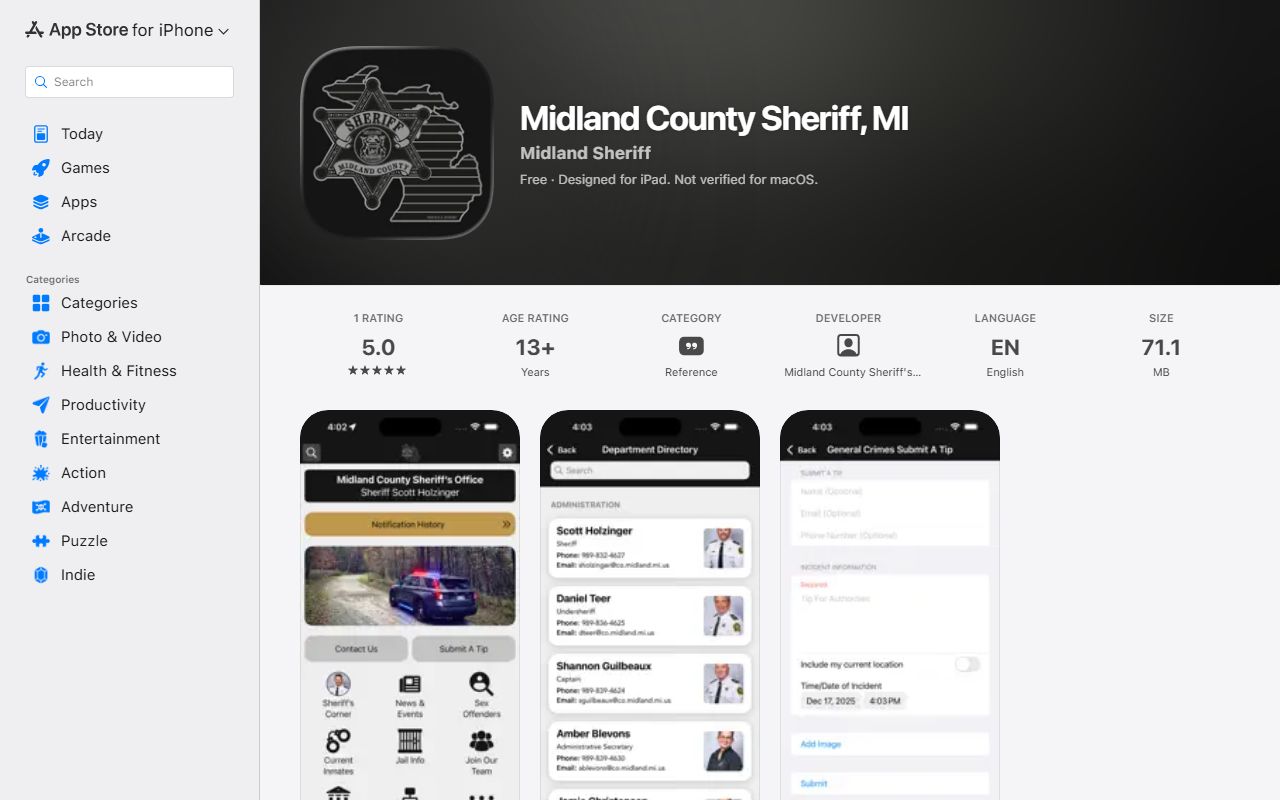
The Apple App Store listing shows the same publisher. The app consolidates inmate and bond details, visitation scheduling, and account deposits. It does not offer an active-warrant search.
Note: The Sheriff app centralizes inmate status and bond information, but the court case search remains the source for formal charge status.
Filing Charges After a Midland County Arrest
The charge record begins the moment a charging document is filed. An arrest alone does not set the charges. A prosecutor or officer must file a formal accusation first. Michigan uses three main documents to do that. Each one fits a different kind of case.
| Complaint | Information | Indictment | |
|---|---|---|---|
| Filed By | Officer / Prosecutor | Prosecutor | Grand Jury |
| Common For | Misdemeanors | Many felonies | Serious felonies |
| Starts | The case | The case | The case |
In Midland County, most cases open with a complaint or an information. Grand jury indictments are rare at the county level. A misdemeanor usually starts with a complaint at arraignment, while a felony moves forward on an information after the preliminary exam.
Who Files Midland County Court Charges
The Midland County Prosecuting Attorney decides which charges to file. Michigan calls this office the Prosecuting Attorney, not the District Attorney. J. Dee Brooks has served as the elected prosecutor since 2014. His office reviews police work and picks the counts that fit the evidence. The victim-rights staff in the office also keep victims informed as the charges move ahead.
The paperwork itself flows through the 75th District Court Criminal Division. That division processes filings from police departments, state law, and local ordinance prosecutors. All criminal cases prosecuted in Midland County are filed there first. From arraignment forward, the charge record grows with each new entry.
Charge Status in Midland County Records
Charges change as a Midland County case moves. The prosecutor can amend, add, drop, or reduce a count. The court can dismiss one. A charge record shows the current status of each count, so a single case may hold charges at different stages. These are the terms that appear most often.
| Status | What It Means |
|---|---|
| Pending | The charge is filed and active, with no final outcome yet. |
| Amended / Reduced | The prosecutor changed the count, often to a lesser offense. |
| Dropped | A charge the prosecutor withdraws before it reaches a verdict. |
| Dismissed | The court ends the charge, by motion or for lack of proof. |
| Nolle Prosequi | A formal notice that the prosecutor will not pursue the charge. |
Midland County Charge Codes and Levels
Every Midland County charge ties to a statute or a local ordinance. The code sets the offense level. Michigan sorts offenses into felonies, misdemeanors, and civil infractions. One arrest can produce several separate charges at once. The court record lists each count on its own line, with its own code and status.
Charge fields are often shortened. The county open-warrant list uses brief tags for each count, and the same short forms turn up across charge records.
- DWLS: driving while license suspended
- OWI: operating while intoxicated
- Retail fraud: theft from a store
- No proof of insurance
- Open intox: open intoxicants in a vehicle
- Domestic violence
- Assault and battery
The full run of current tags appears on the 75th District Court open warrants page. Note: One arrest can lead to several charges, and each count can end differently, so read every line of the record separately.
Midland County Charges vs Convictions
Being charged is not the same as being convicted. A charge is an accusation. A conviction is a result. A person can face several charges and be convicted on none of them. The charge record shows what was filed. The conviction shows what a court or plea settled.
| Charge | Conviction | |
|---|---|---|
| Stage | Accusation | Verdict or plea |
| Burden of Proof | Probable cause | Beyond a reasonable doubt |
| Outcome | Not yet decided | Guilt established |
| Public Record | Yes | Yes |
Statewide Criminal History Lookups
Charges and outcomes can reach beyond the county file. The Michigan Department of Corrections runs the Offender Tracking Information System, known as OTIS. It shows people in prison, on parole, or on probation under current or recent supervision. It does not hold records more than three years after supervision ends. For registered offenses, the Michigan Sex Offender Registry offers a public search by name, address, or county.
These state tools sit above the Midland County charge record. A charge filed in Midland County may never reach state custody, so it may not appear in OTIS at all. Read the county case for the charge itself, and use the state systems for supervision and registry status.
Assigned Counsel After Charges
A person facing charges who cannot afford a lawyer can ask the court to appoint one. Midland County runs an Office of Assigned Counsel for that purpose. Leland Burton leads the office at the Midland County courthouse. The District Court criminal page also links the state petition and order form for appointed counsel. Filing that request early helps at arraignment, when the charges and bond are first addressed.
Background Check Limits
A charge lookup is not the same as a formal background check. Casual searches read public records for personal knowledge. A regulated background check for a job, a lease, or credit must follow federal and state rules. A charge that was dropped or dismissed still shows in raw records, so context matters.
Important: Charge data pulled from public records is not a consumer report under the FCRA and may not be used for employment, tenant, credit, or insurance decisions.
Restricted Charge Records in Midland County
Most Midland County charge records are public once filed. Michigan Court Rule MCR 8.119 governs court records and sets that default. The same rule keeps document images offline, so an online docket is not the full file. For sheriff and administrative records, the Michigan Freedom of Information Act gives a written request path.
Some charge records stay out of public view. Juvenile files are open only by court order under MCL 712A.28. Suppressed cases do not appear in ordinary search. Ongoing investigations and sealed warrant material are also withheld. Personal identifiers, such as protected addresses and victim contact details, are redacted where the rules require it.
Michigan also lets people clear qualifying convictions. The set-aside law, MCL 780.621, is the core application statute. MCL 780.621c lists the exclusions and the traffic-record limits. The District Court criminal page links the current state forms for the process.
Important: A set-aside removes qualifying convictions from public search, yet it does not erase every government record, and law enforcement can still access sealed files.